OUBAS commentary
This OUBAS Reflection was prompted by a powerful video reflection published by Carina Cedrechi. Carina argues that modern government increasingly resembles a private club managing the appearance of leadership while avoiding responsibility for results.
OUBAS agrees with the central substance of her reflection. Her observations speak directly to the “S” in OUBAS: State Abuse.
State abuse does not occur only through dramatic acts of illegality, physical force or openly oppressive decisions. It can also take the form of institutions that remain visible but cease to be meaningfully answerable to the public.
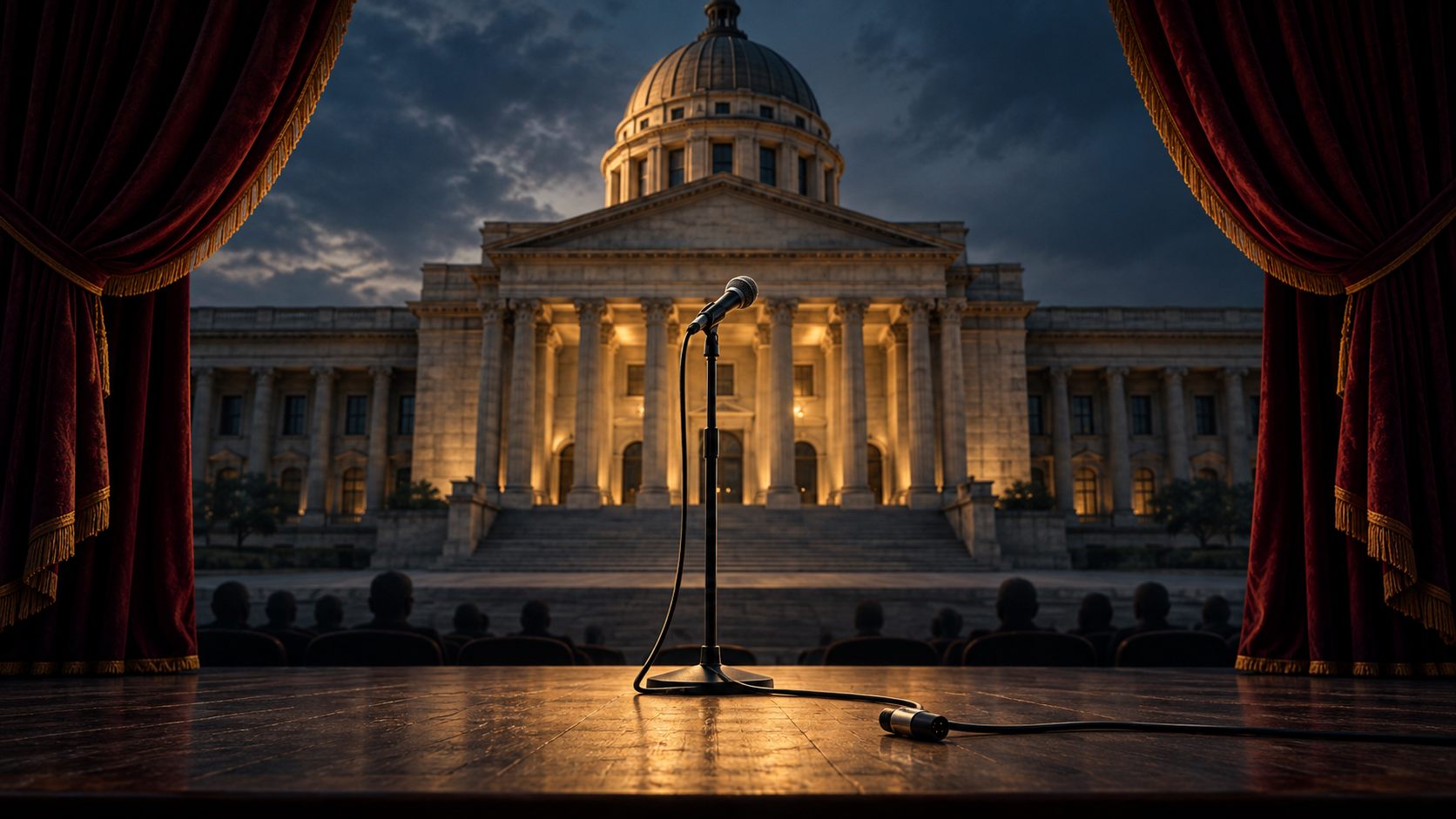
Government becomes performance when speeches replace decisions, committees replace solutions, investigations replace consequences and carefully managed communication replaces honest explanation. Citizens continue to fund the institutions, obey their decisions and live with their failures, yet struggle to identify who is responsible when those institutions do not work.
Elections are essential, but democracy cannot end when the ballots have been counted. Public accountability must continue between elections. Officials entrusted with public power must explain their decisions, disclose how those decisions were reached and accept responsibility for their consequences.
The danger arises when an interconnected group of political office-bearers, officials, consultants, contractors, lobbyists, commercial interests and public communicators becomes more responsive to itself than to the public. Institutions may continue to hold hearings, issue statements and establish commissions while the underlying failures remain unresolved.
In that environment, citizens are no longer treated as the principals whom government must serve. They are processed, classified, surveyed, persuaded and managed. Their concerns receive attention when public support is required, but become difficult to pursue once political or institutional power has been secured.
OUBAS agrees with Carina Cedrechi that leadership requires responsibility. A functioning public institution must be capable of making decisions, explaining them, acknowledging failure and correcting what has gone wrong. Accountability cannot mean another process whose eventual outcome leaves every responsible person untouched.
Public institutions do not belong to the people temporarily occupying their offices. They belong to the public. Office-bearers, officials and institutional leaders are temporary custodians; citizens remain the permanent stakeholders.
This is why the “S” in OUBAS matters. OUBAS examines State Abuse not only where abuse is direct and obvious, but also where opacity, delay, institutional avoidance and performance politics prevent citizens from obtaining answers, accountability and effective public service.
A democratic state must do more than look functional. It must function—and it must remain answerable to the people in whose name it acts.
Verification note
This original OUBAS Reflection was prompted by and responds to a video reflection published by Carina Cedrechi on TikTok. OUBAS agrees with its central message. Readers are encouraged to watch Carina’s original presentation using the link provided on this page. Carina Cedrechi is credited as the creator or publisher of the linked TikTok content. This OUBAS commentary does not suggest that she is affiliated with, has endorsed or represents OUBAS. The original video remains hosted by TikTok and subject to the creator’s and platform’s applicable terms.